
Communities receive an additional $1.18 billion in funding
What you need to know: Building on the first drop in unsheltered homelessness in nearly two decades, Governor Newsom is announcing the next round of mental health and substance use disorder treatment facility funding, bringing statewide behavioral health bond investments through Proposition 1 to more than $4 billion, and providing locals with the tools they need to get people suffering from mental illness and addiction off the street and into care.
SACRAMENTO – Following California’s first statewide drop in unsheltered homelessness in 15 years — a 9% drop – the state continues to deliver by expanding local communities’ capacity to treat those suffering from mental illness and addiction, including untreated homeless individuals.
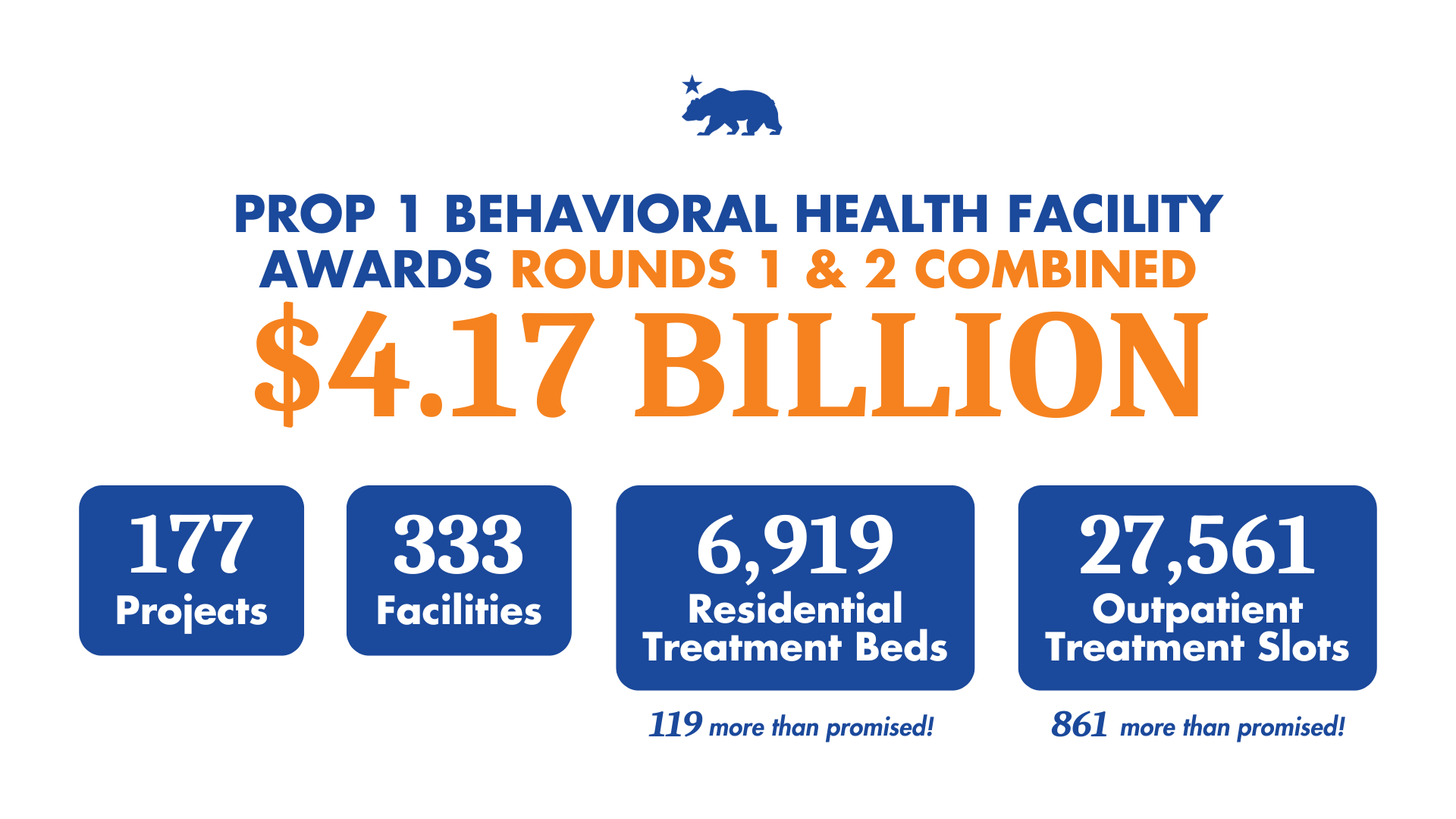
Today, Governor Newsom is announcing the next round of Bond Behavioral Health Continuum Infrastructure Program (Bond BHCIP) awards, with a $1.18 billion investment to fund an additional 66 projects across 130 behavioral health facilities, including in rural and tribal communities, and create even more residential and crisis treatment centers statewide. The state has now delivered to local communities a combined 6,919 residential treatment beds and 27,561 outpatient slots, exceeding Proposition 1 statewide goals in just two years and supporting 177 projects across 333 facilities.
“Proposition 1 is doing exactly what we promised it would do: transforming California’s behavioral health system. In just two years, we didn’t just meet our goal of creating 6,800 treatment beds; we exceeded it. That means we’re finally closing the gap that’s left too many communities without the care they need.
With this final round of awards, we’re not slowing down. We’re building a behavioral health system that actually meets the scale of the crisis — one that delivers treatment, support, and real stability for people who’ve been left behind for far too long. This is about more than short-term wins; it is about laying the foundation for lasting, statewide change.”
“These awards represent far more than new buildings,” said Kim Johnson, Secretary of the California Health & Human Services Agency. “They represent hope, stability, and access to care for hundreds of thousands of Californians. By prioritizing high‑impact, cost‑efficient projects in the communities with the greatest needs, we are closing long‑standing service gaps. These awards reflect strong community partnerships, and a commitment to equity, that will shape California’s behavioral health system, and the lives of Californians, for decades to come.